Extract Trait
Extract Trait pulls a class's public methods out into a NEW trait it then implements: the class keeps its bodies, gains 'with trait of' and the new trait's name on its header and 'override' on each extracted method. Here Product's describe() is the kind of thing other things in a catalogue could promise too, without being a Product. To play it in the IDE: Help > Lessons > Refactoring…, or ek9 -ide -lesson extract-trait.
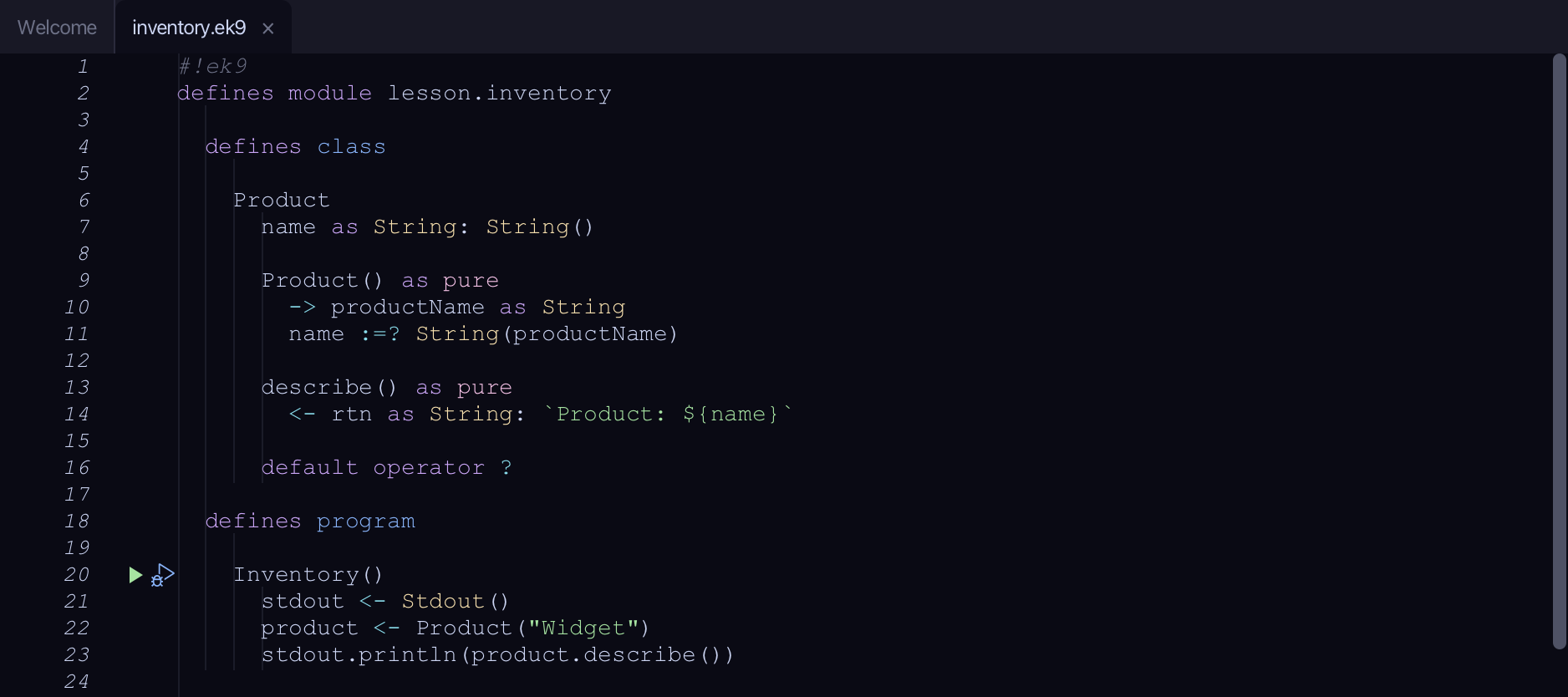
Start from
The code the lesson starts from: copy it into a file of your own and follow the steps.
#!ek9
defines module lesson.inventory

  defines class

    Product
      name as String: String()

      Product() as pure
        -> productName as String
        name :=? String(productName)

      describe() as pure
        <- rtn as String: `Product: ${name}`

      default operator ?

  defines program

    Inventory()
      stdout <- Stdout()
      product <- Product("Widget")
      stdout.println(product.describe())

//EOF
Step 1: Where it is
Put the caret on Product, on line 6.
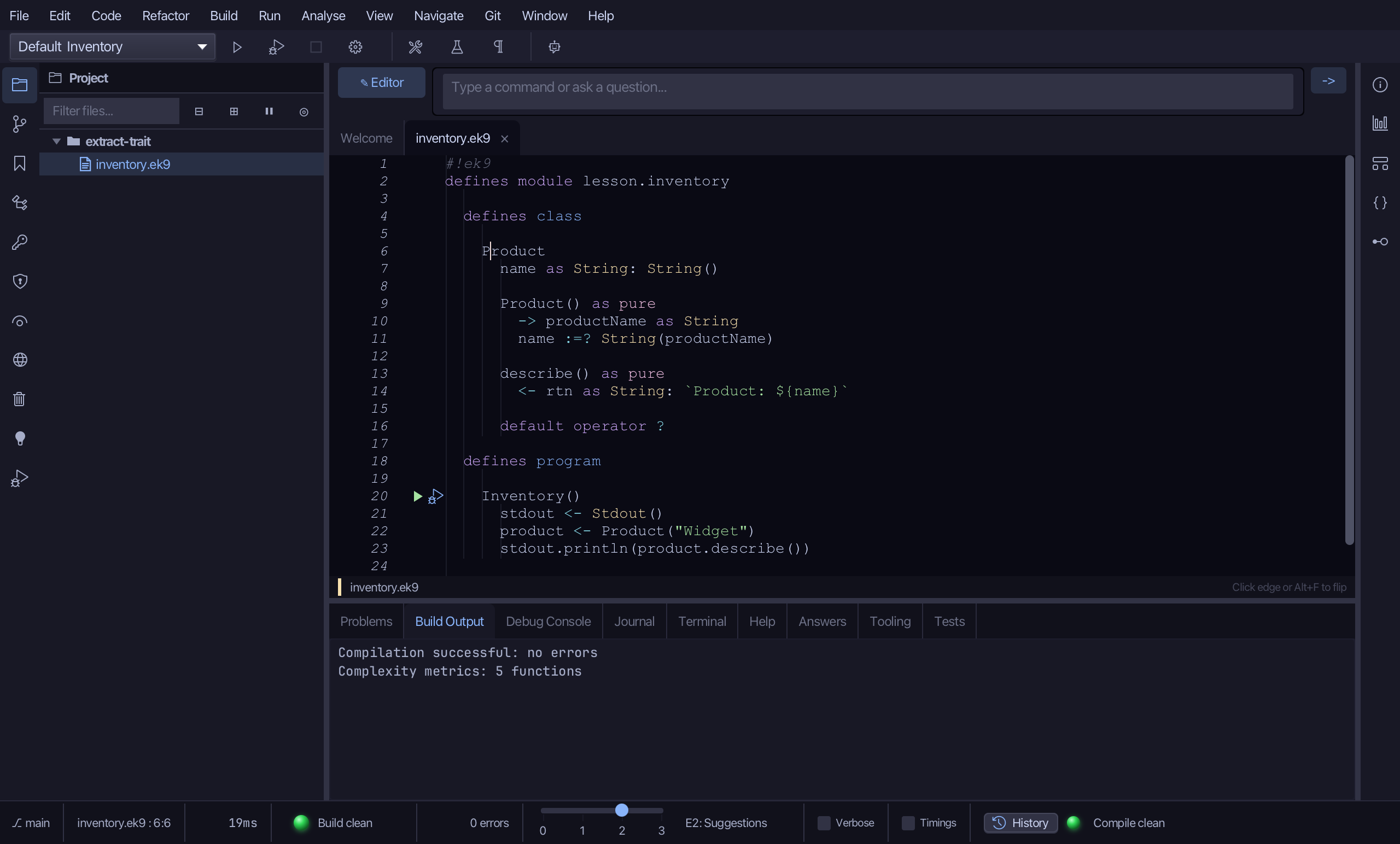
Step 2: Extract Trait
Right-click it - or choose Refactor > Refactor This… - and choose Extract Trait…
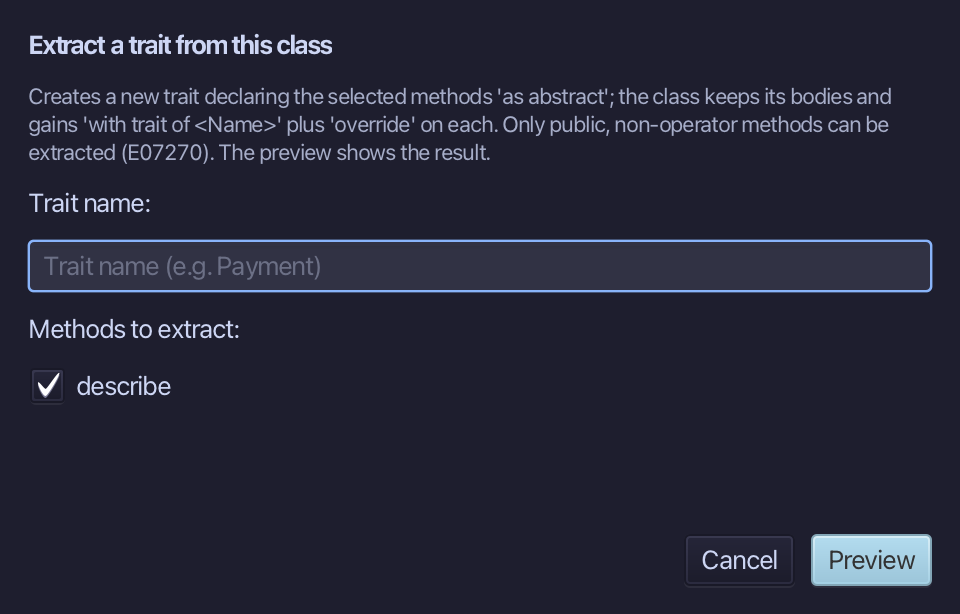
Name it Describable - what describe() promises - and choose Preview.
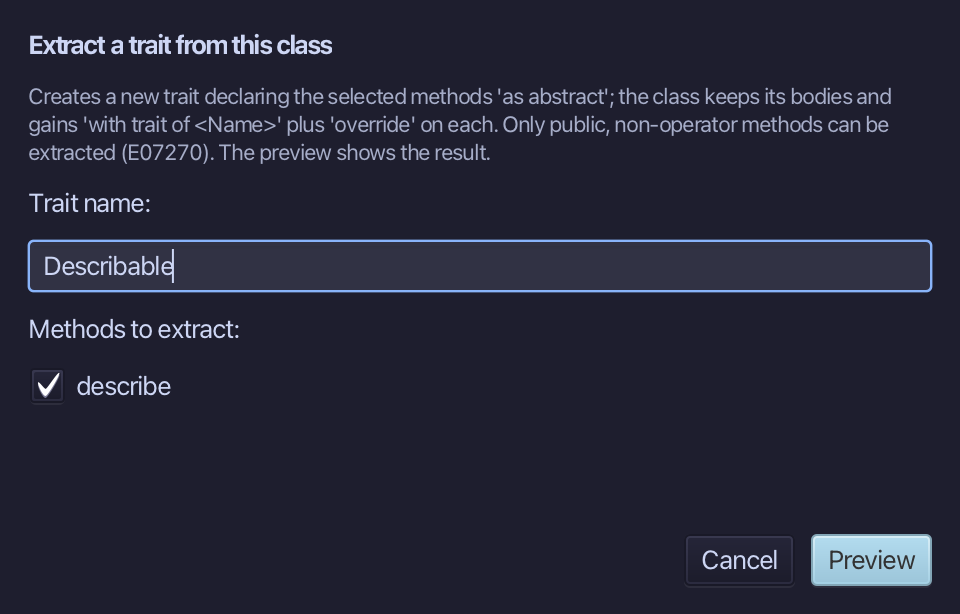
Step 3: Preview and apply
The preview shows every change the refactoring makes; then the IDE formats each file it changed. Choose Apply.
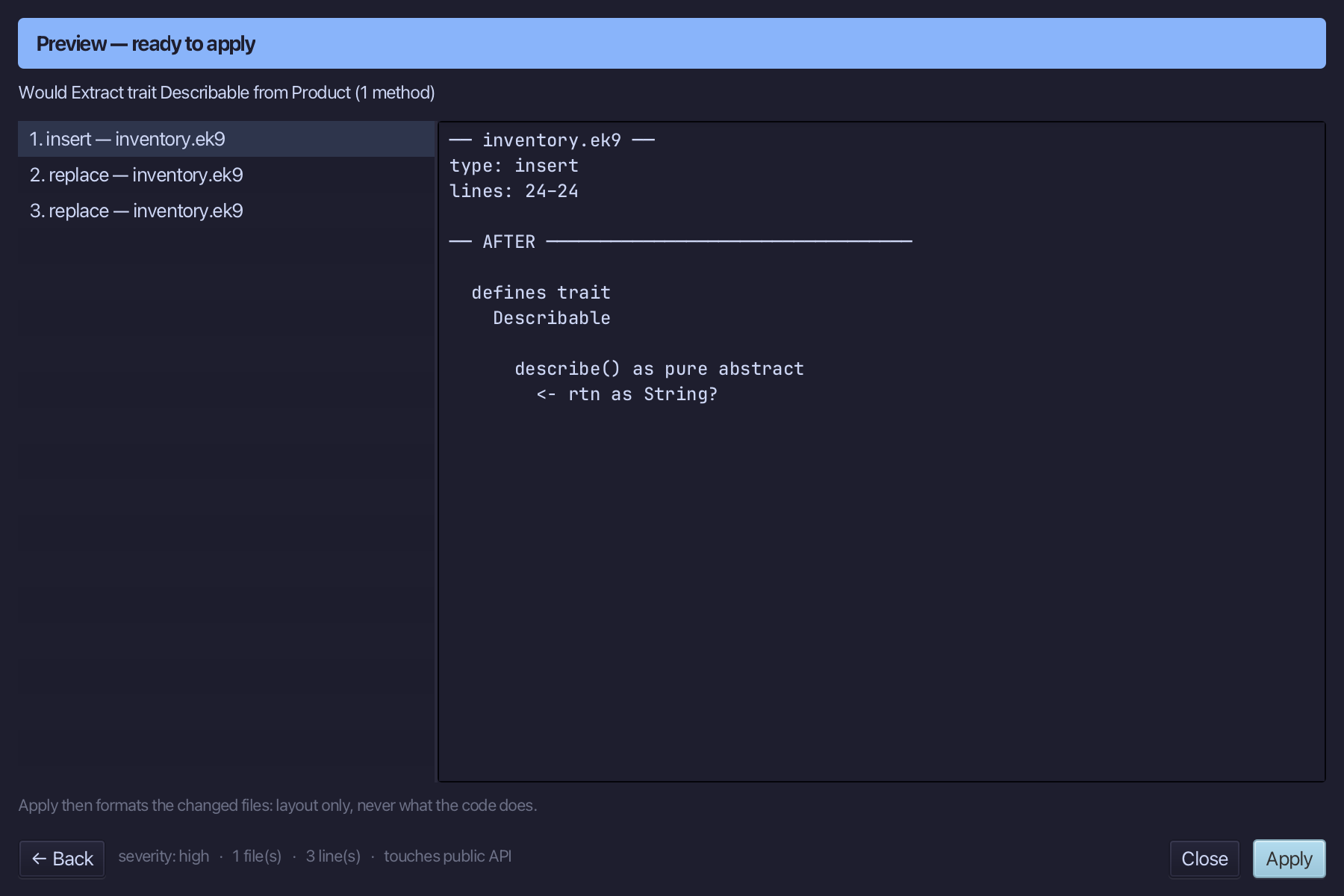
The result
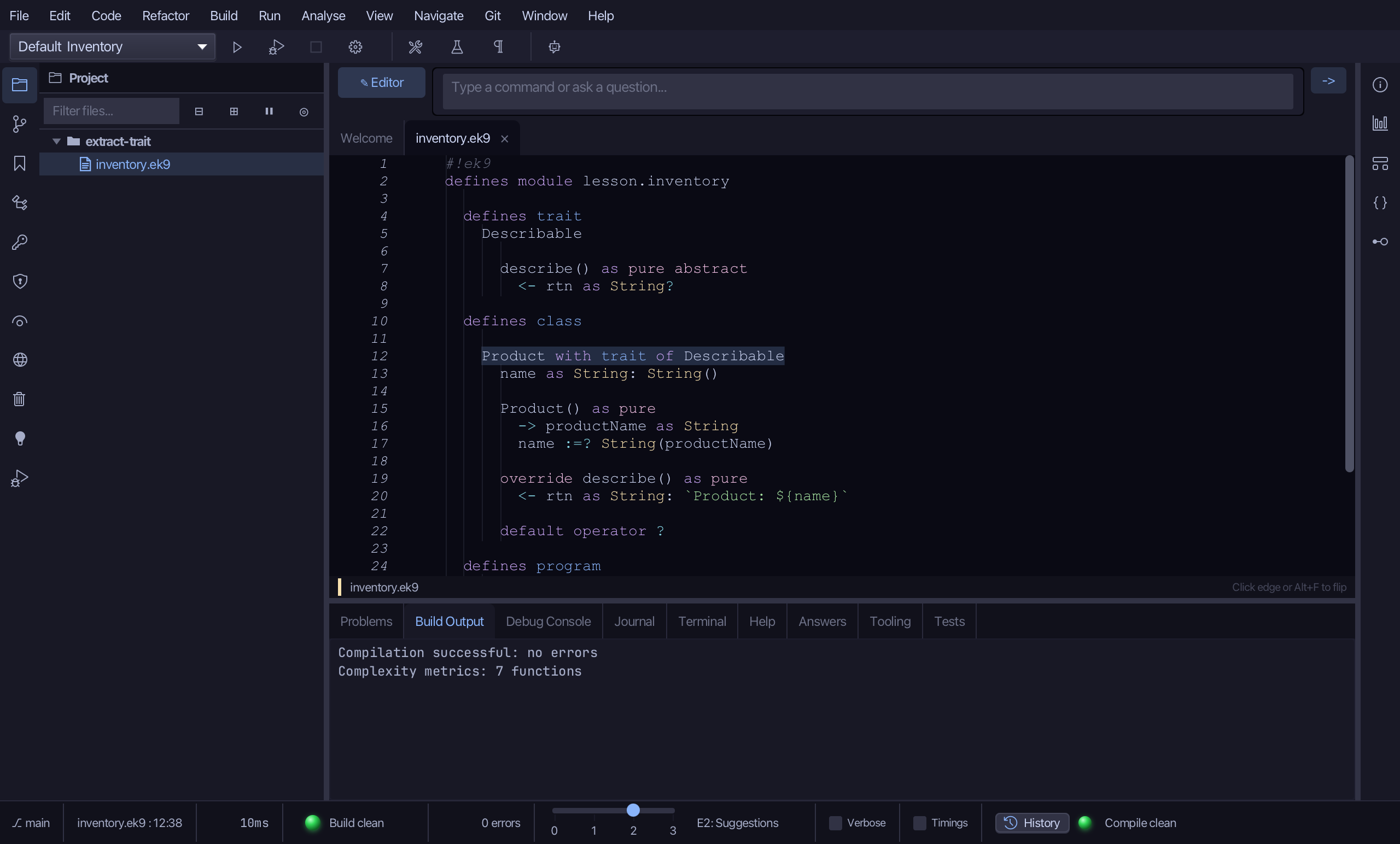
That is Extract Trait: Product now implements Describable, describe() is overridden, and the trait declares describe() as abstract for anything else that adopts it. A name already used in the file, or a method that is private, protected or an operator, surfaces as a conflict instead of an error (traits are public-only, E07270). It is on the right-click menu wherever the caret is on a class's declaration line with at least one extractable method; AI assistants use the ek9_extract_trait tool.
Where this lesson comes from
- For AI assistants - the MCP tool
ek9_extract_trait.